

For years, people living with mental illness, and their families, have been told some version of the same thing:
“Take your medications.”
“Go to therapy.”
“Learn to cope.”
Those interventions can absolutely help, sometimes dramatically.
But many people are still suffering.
Since publishing Brain Energy, I have heard from thousands of people around the world searching for answers. One of the most common messages I receive is:
“My psychiatrist/therapist/doctor has never heard of any of this.”
“This” usually refers to the growing body of evidence linking metabolism, mitochondrial function, insulin resistance, nutrition, exercise, and other aspects of physical health to mental health.
I’ve been working tirelessly to change this.
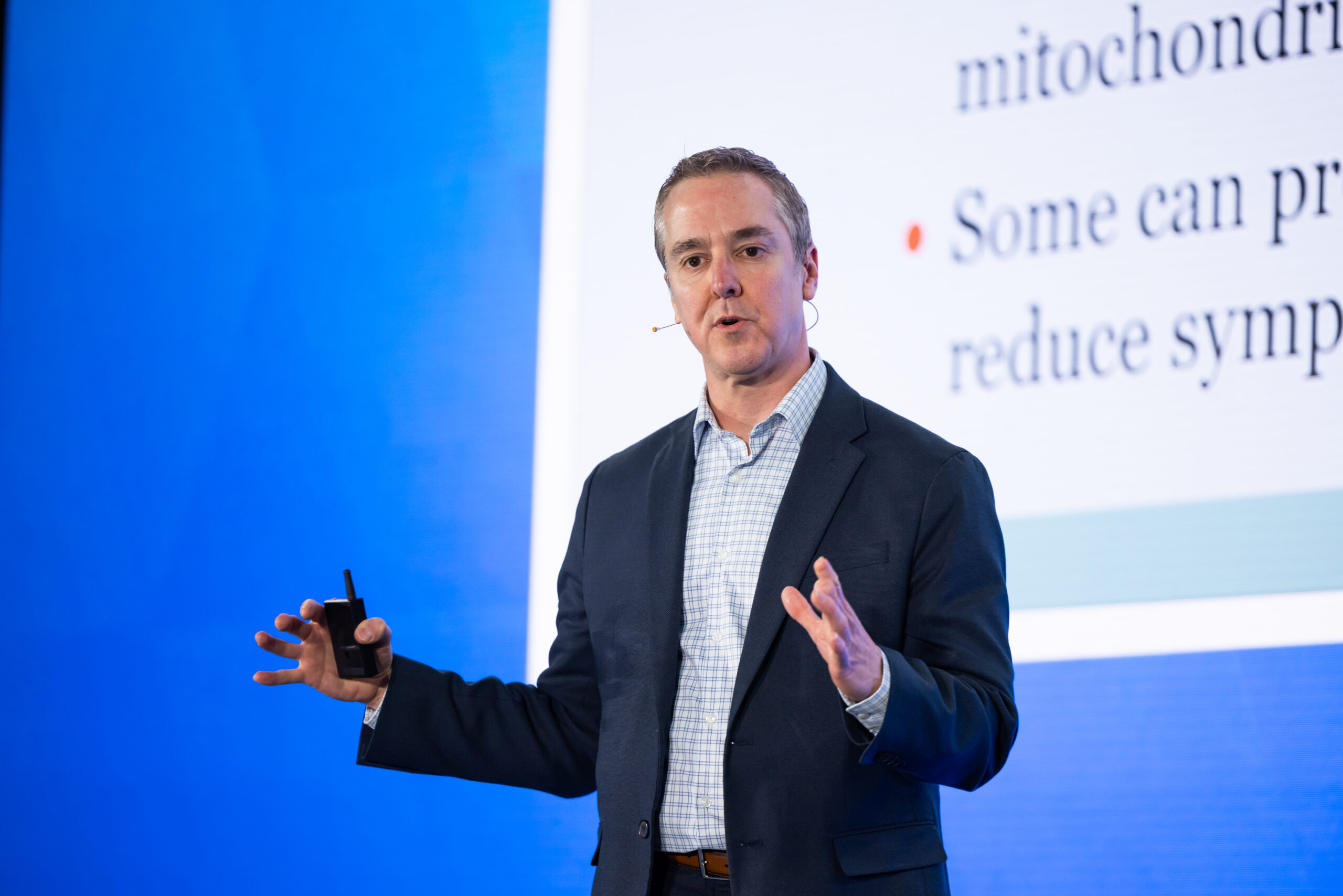
Next Saturday, I have the honor of giving an invited talk at the annual meeting of the American Psychiatric Association—one of the largest psychiatric meetings in the world—on the topic, “Brain Energy: The Metabolic Theory of Mental Illness.” The invitation came from the APA Scientific Program Committee, which makes this especially meaningful to me.
I’ll also be attending and participating in the Metabolic Psychiatry Reception during this meeting, hosted by the Baszucki Group.
A few years ago, conversations about ketogenic therapy, mitochondrial dysfunction, insulin resistance, or metabolic interventions for serious mental illness were often dismissed outright by mainstream clinicians.
Now these topics are increasingly being discussed at major academic meetings, in top journals, and in serious scientific conversations.
This progress matters.
These educational opportunities are close to home for me as well. I’ll be giving a talk at the Harvard Medical School Psychiatry in 2026 conference, and perhaps most exciting of all, organizing a four-day Harvard Medical School conference this September, Mental Health and Metabolic Health: The Science and Art of Integrated Care.
This interdisciplinary meeting is designed to bring together psychiatrists, psychologists, primary care clinicians, dietitians, researchers, therapists, nurses, health coaches, and others who recognize that mental and physical health cannot be separated.
I’m especially excited that, alongside world-renowned researchers, clinicians, and educators, the conference will also feature panels of people with lived experience who are recovering from serious mental health conditions using metabolic treatment strategies. Their stories remind us that this work is not just about theories, biomarkers, or academic debates; it’s about helping real people reclaim their lives.
None of this will change the field overnight.
But real change in medicine rarely happens overnight.
It happens one paper at a time.
One patient at a time.
One clinician at a time.
One conference at a time.
When I first began publicly talking about metabolism and mental illness, many people viewed the ideas as fringe or overly simplistic. Some still do.
But the scientific evidence continues to grow.
More importantly, the clinical stories continue to grow.
Clinicians around the world are seeing patients improve their mental health using metabolic treatment strategies. Researchers are uncovering links between mitochondrial function and psychiatric symptoms. Patients are asking deeper questions about sleep, food, inflammation, exercise, stress, medications, and overall health.
The conversation is changing.
Slowly.
Unevenly.
But unmistakably.
If your mental health provider has never heard of this work yet, that doesn’t necessarily mean they are closed-minded or uninformed. Most clinicians simply haven’t been trained in these areas. Medical and mental health education systems change slowly, and clinicians are often overwhelmed just trying to keep up with existing demands.
That’s why education matters so much.
And YOU can help.
If you’re a mental health professional, please consider attending these or other educational events to continue learning and growing. If you know a mental health professional, consider sharing these opportunities for professional development with them.
I continue doing this work:
- Not because I think metabolism explains everything.
- Not because I think there is one treatment for everyone.
- And certainly not because I think we should abandon existing treatments.
I do it because people with mental illness deserve better answers, more options, and greater hope for recovery.
We still have a long way to go.
But we are moving.
And I’m grateful to everyone who has helped move this conversation forward.

Dr. Christopher Palmer is a Harvard psychiatrist and researcher working at the interface of metabolism and mental health. He is the Founder and Director of the Metabolic and Mental Health Program and the Director of the Department of Postgraduate and Continuing Education at McLean Hospital and an Assistant Professor of Psychiatry at Harvard Medical School. For almost 30 years, he has held administrative, educational, research, and clinical roles in psychiatry at McLean and Harvard. He has been pioneering the use of the medical ketogenic diet in the treatment of psychiatric disorders—conducting research in this area, treating patients, writing, and speaking around the world on this topic. Most recently, he has proposed that mental disorders can be understood as metabolic disorders affecting the brain, which has received widespread recognition in both national and international media outlets.
